


Dish Pessary with support faqs
What is a pessary?
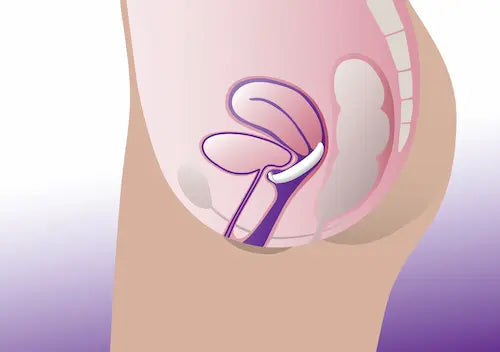
A vaginal pessary is a removable device placed inside the vagina to support pelvic organs. It is commonly used to treat pelvic organ prolapse (such as cystocele or rectocele) and stress urinary incontinence. Pessaries provide internal support to relieve symptoms and improve comfort without the need for surgery.
What is SUI and how does a pessary help?
Yes, pessaries are considered a safe, conservative, and reversible treatment option for many people with prolapse or stress incontinence. They are often recommended as an alternative to surgery or while waiting for surgical treatment. Modern pessaries are typically made from medical-grade silicone and are designed for long-term use under professional guidance.
What is the difference between a ring with knob, an iDish, and a dish pessary?
RING WITH KNOB
Also known as a urethral pessary
- Ring design with a central knob that sits behind the pubic bone to support the bladder neck and urethra
- Reduces stress urinary incontinence (SUl) by increasing urethral resistance
- Also supports uterine prolapse
- Requires good pelvic floor muscle tone to retain the pessary in place
- Suitable for self-management once fitted
- Available with or without a supporting membrane
Note: This is the only incontinence pessary suitable for use in pregnancy (after the first trimester),
IDISH PESSARY
Urethral dish pessary with enlarged support pilot
- Dish-shaped pessary with an enlarged urethral support pilot for greater bladder neck support
- Applies urethral pressure to reduce urine leakage - particularly effective during coughing, sneezing and exercise
- Can also help manage pelvic organ prolapse symptoms alongside SUI
- Provides more targeted urethral pressure than a standard dish pessary
- Intended for clinical fitting and management by a trained healthcare professional
- Available with a supporting membrane for additional internal support
DISH PESSARY
Dish pessary with smaller knob support
- Features a smaller knob or raised support compared to the iDish, providing gentle bladder neck and urethral pressure
- Suitable for second- or third-degree uterine prolapse, cystocele, and rectocele
- Can help reduce stress urinary incontinence whilst also managing prolapse symptoms
- A versatile option where both prolapse support and mild urethral support are required
- Made from medical-grade silicone for comfort and long-term use
- Available with or without a supporting membrane
Summary
The ring with knob is best where prolapse and SUl coexist and pelvic floor tone is adequate. The iDish offers stronger urethral pressure and bladder neck support, particularly where SUl is the primary concern.
The dish pessary provides a gentler support option suitable for both prolapse and mild incontinence symptoms. If you are unsure which pessary is most appropriate, please consult your GP, gynaecologist, or specalist continence nurse.
What are the contraindications and cautions for pessary use?
CONTRAINDICATIONS
A pessary should not be used in the following situations:
- The patient is unable to comply with regular follow-up and is not able to self-manage the pessary
- Active vaginal or pelvic infection, inflammation, or unexplained bleeding
- Ongoing vaginal or cervical cancer
- Severely atrophic vaginal tissue that has not responded to pre-pessary oestrogen treatment
- Vaginal dimensions that make fitting too difficult
- Identifiable synthetic vaginal mesh erosion
CAUTIONS
A pessary may be an option but additional caution is required when:
- Poor vaginal health - vaginal oestrogen therapy may be required prior to fitting
- Previous radiotherapy affecting the vaginal tissues
- Synthetic mesh has been placed in the vagina during previous surgery
- Pre-existing vaginal pain (e.g. pudendal neuralgia)
- The patient is immunosuppressed
Known complications
The following complications are recognised with pessary use. Vaginal changes are common but do not always mean pessary use should stop:
- Very common: increased vaginal discharge
- Common: erosion or abrasion of vaginal skin, vaginal bleeding, discomfort, pessary expulsion, new bladder or bowel symptoms
- Uncommon: vaginal ulceration, difficulty with removal, infection, incarceration
- Rare : fistula Formation

📦 Free Delivery

🔒 Discreet Packaging

📞 Need Help?
