


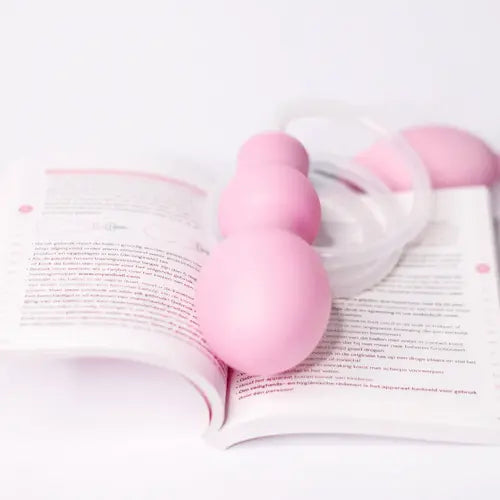


How to use Aniball
You can start using Aniball from the completed 36th week of pregnancy. In the following video, you’re going to learn how to use Aniball correctly. The balloon and pump are made of biocompatible, body-safe silicone. It contains no harmful chemicals.
You can download the manual by clicking here.
faq
what does Perineal Training do?
Perineal training with Aniball is designed to help you become familiar with the sensation of vaginal stretching and to practise relaxing your pelvic floor in the final weeks of pregnancy.
The purpose of the exercise is not to achieve a specific balloon size. Balloon measurement is provided for guidance only and does not determine your birth outcome. Training should always feel comfortable and should not cause pain.
As your due date approaches, hormonal changes naturally increase tissue elasticity. Regular, gentle practice can help you:
- Improve awareness of how to consciously relax the pelvic floor
- Practise controlled breathing during stretching
- Gradually adapt to the sensation of pressure
- Build confidence ahead of labour
Based on available clinical data, reaching a balloon circumference of around 25 cm (approximately 10 pumps) has been associated with a reduced risk of more significant perineal trauma. However, results vary and this measurement does not guarantee that tearing will not occur.
It is not necessary to increase the balloon size at all costs. You should never exceed 25 cm, as overinflation may cause discomfort or injury.
If you experience pain, bleeding or have any pregnancy complications, stop using the device and consult your midwife or obstetrician.
Can Aniball Reduce the Risk of Tearing?
Aniball is designed to help prepare the perineum for vaginal birth by supporting controlled stretching and improving awareness of pelvic floor relaxation in the final weeks of pregnancy.
Some studies and user experiences suggest that structured perineal training from 36 weeks may help reduce the likelihood or severity of perineal trauma, particularly severe tears. However, no device can guarantee that tearing will not occur. The outcome of birth depends on many factors, including baby’s size and position, maternal tissue elasticity, labour management, and whether assisted delivery is required.
The aim of using Aniball is not to “prevent” tearing outright, but to:
- Improve confidence with the sensation of stretching
- Encourage controlled breathing and relaxation
- Support gradual preparation of the perineal tissues
- Potentially reduce the risk of more significant trauma
For best results, it should be used according to the manufacturer’s instructions from 36 weeks of pregnancy, and only if your midwife or obstetrician is happy for you to do so.
If you have a high-risk pregnancy or any concerns, always seek professional advice before starting perineal training.
When should I start perineal training in pregnancy with Aniball?
For Aniball birth preparation, you should begin using the device from 37 weeks. That’s the point at which Aniball exercises are designed to safely support prenatal preparation without overstressing tissues earlier in pregnancy.
Here’s how the guidance works in practice:
📌 Timing
Start once you’ve passed 36 weeks of pregnancy.
If you only begin very close to your due date (for example, about 2 weeks before birth), that’s still worthwhile — even a short period of practice can help you get familiar with the breath and positions.
📌 What to expect
Use Aniball regularly (daily or on most days) from this point to help your body and mind get familiar with pelvic floor relaxation and breathing techniques.
The goal isn’t to force the birth canal to stretch permanently, but to become comfortable with how it feels and how your pelvic floor responds during labour.
📌 Important reminders
Always follow the official instructions for use.
Stop or consult your healthcare professional if you have pain, discomfort, bleeding, or any pregnancy complications.
Can I start exercising 14 days before my due date?
You can start exercising with Aniball from your 37th week of pregnancy. 15 minutes a day is sufficient, however, feel free to exercise for longer, unless pain or discomfort arise.
How often should I exercise with Aniball?
You can start exercising with Aniball at the end of your 36th week of pregnancy. 15 minutes a day is sufficient, however, feel free to exercise for longer, unless pain or discomfort arise.
What is an episiotomy and what are its long term effects?
A perineal cut or episiotomy is a surgical incision of the perineum (the area in between the vaginal opening and anus) during childbirth. The point of this procedure is to enlarge the vaginal opening and to prevent spontaneous tearing of the perineum. Unfortunately, this procedure is often linked to a number of unpleasant complications and negative side effects, usually lasting for life. Common negative side effects include pain during urination, limitations to intercourse, necessary perineal plastic surgery, incontinence in older age and other seemingly unrelated (headaches, psychological duress) effects. This is why it is important to avoid damage to the perineum (caused by tears or incisions).
Can I use Aniball after the mucus plug has come out?
Yes, you can safely continue exercising with the balloon after the mucus plug has gone. It is different after the amniotic fluid has drained (or after performing the Hamilton manoeuvre, for example), when there is already a risk of introducing infection and other complications - therefore, the use of Aniball is strictly contraindicated.
Have more questions?
Check out our comprehensive FAQ section below for answers to common questions about Aniball and perineal health.

Aniball
Want to learn more?
Be sure to watch these informative videos explaining the use of Aniball.

Why Women Choose Aniball
During vaginal birth, the birth canal stretches significantly as your baby’s head crowns. The greatest tension occurs in the final stage of labour, when the perineal tissues stretch from approximately 3 cm to around 10 cm.
In some settings, episiotomy or assisted delivery may increase the likelihood of perineal trauma. Recovery from perineal injury can be uncomfortable and may take time.
Aniball is designed to support gentle perineal training in the final weeks of pregnancy. It helps you:
- Become familiar with the sensation of vaginal stretching
- Practise relaxing the pelvic floor muscles
- Coordinate breath and muscle control
- Build confidence ahead of labour
Rather than forcing rapid stretching, Aniball encourages gradual adaptation and awareness. When used from 36 weeks in uncomplicated pregnancies, structured perineal training may help reduce the risk of more significant perineal trauma.
Every birth is different, and no method can guarantee the prevention of tearing. However, many women choose Aniball as part of their preparation for a more controlled and confident birth experience.
Professional Reviews
-
Aniball is one of the exciting possibilities for how to help women during natural birth not to be harmed. On the other hand, Aniball may also improve - regain pelvic floor strength after vaginal delivery. The idea and thesis may make great sense to many women worldwide. So far, the use of Anibal is based on excellent experience with that gadget at our department. That is the reason why we want to have evidence-based data. Therefore, we decided to organize a multicenter study among the centers. As the biggest Department of Obstetrics and Gynecology in the Czech Republic, we feel the responsibility for the women and midwives who would like to offer guidance and help to women.
prof. MUDr. Vít Weinberger - Ph.D.Head of the Department of Obstetrics and Gynecology, University Hospital and Faculty of Medicine, Masaryk University, Brno

-
Practicing conscious relaxation of the pelvic floor, working with the breath, the opportunity to "train" the feeling of pressure, increased self-confidence, and the satisfaction of knowing you've done your best for yourself... that's what it's all about.
Bc. Anna Fančovičová - Midwife

-
Childbirth is usually heavily affected by a woman's psychology. Therefore, it is vital for each upcoming mum to be ready and calm. Aniball helps tremendously and teach women how to engage their pelvic muscles and breathe correctly. The pressure during labour is very specific and requires the right combination of muscle engagement and breathing to be effective and safe. This is where Aniball helps a lot. Women are ready, confident, and they know how to breathe and push.
Jana Neudecker - Mum & Gynaecologist

-
I cannot thank you enough! First time mum using Aniball and I had no stitches, had the shortest second stage possible and to top it all off my baby came out direct OP. So really should have needed some stitching or intervention to help her out and thanks to Aniball I needed nothing all! I cannot recommend it highly enough and think every woman should be using Aniball. Thank you so much!
Angileta Willis - Mum & Midwife, UK

-
The exercise with the Aniball balloon and the massaging of the perineum should be part of the preparation for each woman’s natural birth. From my personal experience: as a primipara, I knew which position during childbirth would be most suitable for me, I knew the feeling of when the child’s head was crowning and how to push; and I gave birth naturally without the least injury. My son’s head circumference was 34.5 cm. Aniball is effective and safe.
Monica Ziman - Mum & Gynaecologist


Pregnancy and Postpartum
Blog Posts


📦 Free Delivery

🔒 Discreet Packaging

📞 Need Help?
